
30 May 2025, By Cemaliye Özverel Ekinci | Environmental Engineer
World Overshoot Day marks when our planet has consumed all the resources it can sustainably provide for that year. In summary, it signifies the point at which natural resource consumption exceeds the Earth’s capacity to regenerate those resources within the same year. The calculation of Overshoot Day is based on the ratio of the Earth’s resource regeneration capacity, or biocapacity, to humanity’s ecological footprint. Data from over 200 countries, averaging 15,000 data points annually, are analyzed historically to determine this date.
When examining past data, it is observed that World Overshoot Day was postponed by three weeks due to the COVID-19 pandemic. This was caused by a decrease in energy demand due to restricted activities during the pandemic, leading to lower emissions and, consequently, a reduced demand for forest products.
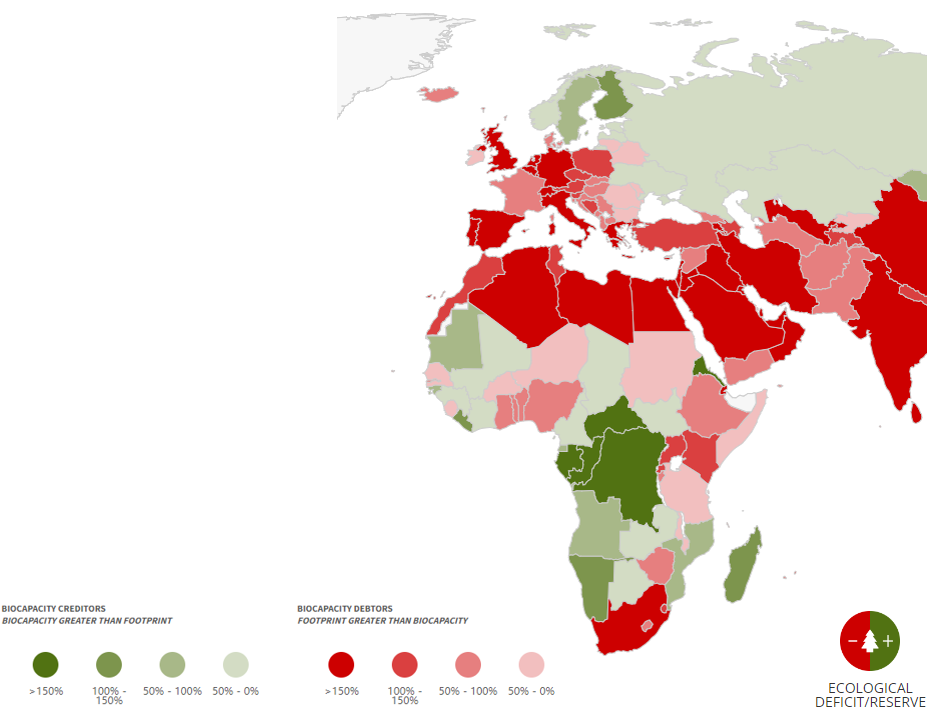
It is known that no data or studies have been conducted on this issue in the Turkish Cypriot community. However, looking at studies conducted in our region for guidance, it is evident that our ecological footprint exceeds biocapacity. For instance, Turkey exceeds by -120%, Greece by -160%, Egypt by -410%, Israel by -1600%, Palestine by -530%, Malta by -780%, and Cyprus by -810%. When examining per capita biocapacity, Cyprus has 4 decares, Turkey 17 decares, Greece 16 decares, Malta 5 decares, Lebanon 3 decares, and Egypt 3 decares 1 . Particularly in island nations, where resources are limited, and ecosystems are fragile, external dependency is higher, leading to challenges in implementing sustainable environmental management strategies and practices. For example, in our community, several regulations have been enacted under Environmental Law No. 18/2012, while others that are ready to be implemented are still awaiting publication. However, even with the existing regulations, significant issues persist regarding their enforcement and supervision.
to create a new world from other planets, unless we manage our resource consumption wisely, no number of worlds would ever be enough for us.
Individual Contributions and Goals
If we consider what we can do individually to reduce our impact on the planet, we can start by consuming fewer animal products, as livestock farming is one of the major contributors to methane emissions, a leading cause of climate change. Additionally, we can opt for public transportation or cycling whenever possible, minimize our energy consumption, and be mindful of purchasing only what we truly need. Transport by road, air, and sea generates emissions and depletes our natural resources. Moreover, adopting simple habits such as waste prevention, reduction, reuse, repair, and proper waste separation can significantly contribute to protecting our planet. You can also check your personal Overshoot Day and explore ways to take action by visiting https://www.footprintcalculator.org/en/results/0/solutions.
When looking at global waste production, it is evident that per capita waste generation in Cyprus is higher than in many other countries, leading to greater resource consumption. To reduce waste production, the strategies outlined in the previous paragraph must be implemented collectively. In our country, landfill disposal is still considered a well-developed and controlled waste management method. However, it is crucial to recognize that waste has value and can serve as raw material for other products. In the past, the “cradle to grave” principle was commonly applied, but now the “cradle to cradle” approach is being adopted. This concept focuses on reprocessing waste materials into new products instead of discarding them. One of the simplest examples of this is compost production from organic waste. Since individuals in the same geographic region tend to have similar consumption habits, the first step toward change may be education and awareness campaigns. By promoting sustainable resource use at the macro level, we can encourage more responsible consumption and waste management practices.
Using our resources efficiently and reducing our ecological footprint are the keys to leaving a more livable world for future generations. It is our collective responsibility—both as individuals and as communities—to do our part in ensuring a sustainable future.
Resources:
1. Global Footprint Network. Web-site:
https://data.footprintnetwork.org/?_ga=2.267648838.977328640.1721650737-229449648.1721650737#/ (Last update: 20.7.2024)
2. Grow Circular. Web-site 9R Framework – CE Grow Circular (grow-circular.eu) (last update 14.7.2024)
Cemaliye Özverel Ekinci
Discover MoreThe content of this blog is the sole responsibility of the author and do not necessarily reflect the views of the European Union.